
Cultured Marble vs.
Other Materials
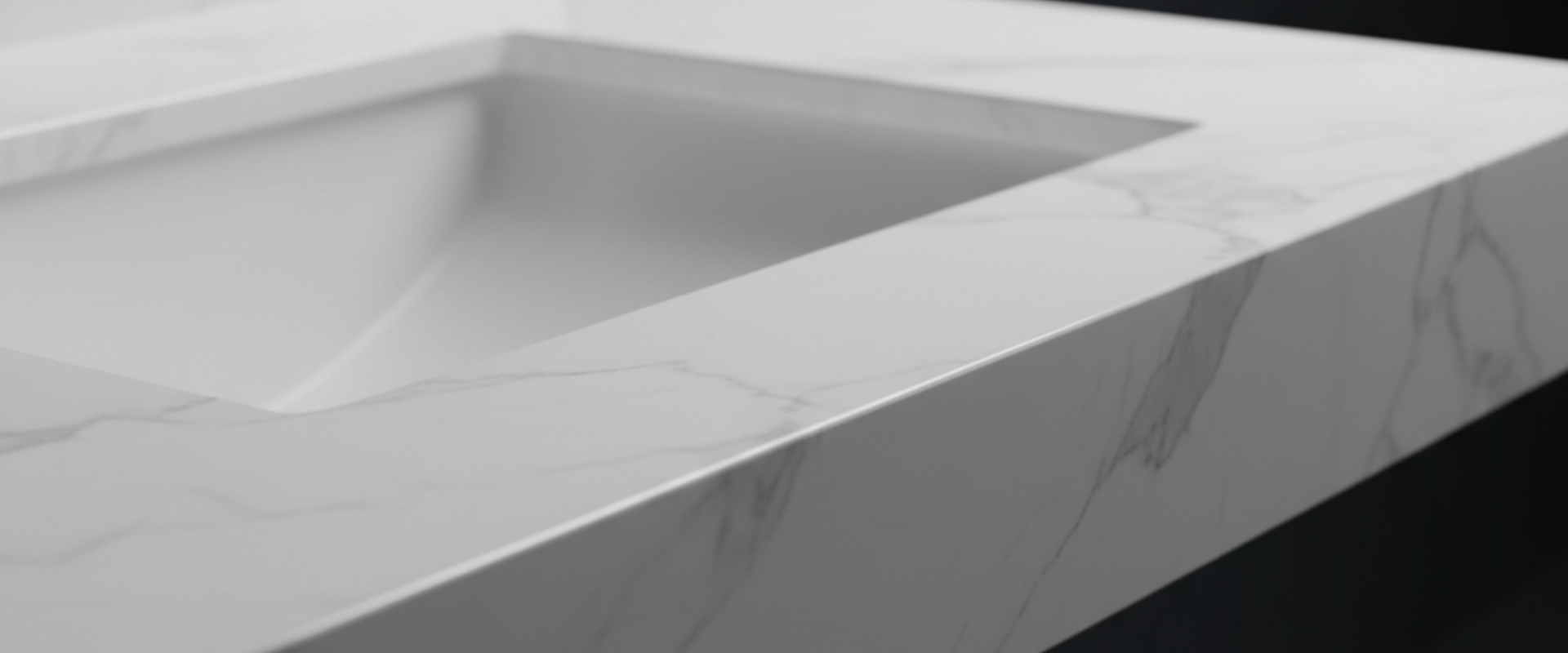
For B2B buyers comparing surfaces for hospitality, multifamily, or builder programs: cultured marble is up to 50% cheaper than quartz, up to 40% lighter than natural stone, and the only material that can be cast as a single piece with an integral bowl. Side-by-side tables across 5 materials × 10 features each.
Cultured Marble vs. Quartz
| Feature | Cultured Marble | Quartz |
|---|---|---|
| Porosity | Non-porous | Non-porous |
| Sealing | Never | Never |
| Integral Bowl | Yes — one-piece | Not possible |
| Weight | Up to 40% lighter | Heavy (similar to stone) |
| Scratch Resistance | Good (gel coat) | Excellent |
| Heat Resistance | Moderate | Good |
| Custom Colors | 44+ options | Limited palette |
| Price Point | Budget-friendly | Mid-high |
| Repairability | Gel coat repairable | Difficult to repair |
| Installation Speed | Fast — one piece | Moderate — requires seaming |
Verdict: Cultured marble wins on weight, integral bowls, and price. Quartz wins on scratch resistance.
Cultured Marble vs. Natural Stone (Granite & Marble)
| Feature | Cultured Marble | Natural Stone (Granite & Marble) |
|---|---|---|
| Porosity | Non-porous | Porous — absorbs liquids |
| Sealing | Never | Required annually |
| Integral Bowl | Yes — one-piece | Not possible |
| Weight | Up to 40% lighter | Heaviest option |
| Stain Resistance | Excellent | Poor without sealing |
| Pattern Uniqueness | Consistent batch-to-batch | Unique natural veining |
| Perceived Value | High — marble look | Highest — natural material |
| Custom Colors | 44+ options | Natural colors only |
| Price Point | Budget-friendly | Highest |
| Maintenance | Soap and water | Special stone cleaners + sealing |
Verdict: Cultured marble wins on porosity, weight, maintenance, and price. Natural stone wins on perceived luxury and uniqueness.
Cultured Marble vs. Ceramic & Porcelain Tile
| Feature | Cultured Marble | Ceramic & Porcelain Tile |
|---|---|---|
| Grout Lines | Zero — seamless | Many — mold-prone |
| Porosity | Non-porous surface | Tile OK, grout is porous |
| Installation Speed | Hours (one-piece panels) | Days (tile + grout + cure) |
| Maintenance | Soap and water | Grout cleaning + resealing |
| Mold Resistance | Excellent — no grout | Poor — grout molds |
| Design Variety | 44+ colors, 6 patterns | Thousands of options |
| Heat Resistance | Moderate | Excellent |
| Repairability | Gel coat repairable | Replace individual tiles |
| Price Point | Mid (material + fast labor) | Low material, high labor |
| Hotel Suitability | Preferred — no grout callbacks | Problematic long-term |
Verdict: Cultured marble wins on grout, installation speed, and maintenance. Tile wins on design variety and heat resistance.
Cultured Marble vs. Solid Surface (Corian, etc.)
| Feature | Cultured Marble | Solid Surface (Corian, etc.) |
|---|---|---|
| Porosity | Non-porous (gel coat) | Non-porous (homogeneous) |
| Sealing | Never | Never |
| Integral Bowl | Cast in mold — one-piece | Thermoformed or routed |
| Seamless Joining | Not joinable | Chemically bonded — invisible seams |
| Thermoforming | Not possible | Can be bent with heat |
| Custom Colors | 44+ options | Wide palette |
| Scratch Repair | Gel coat buff/fill | Sand and buff entire surface |
| Price Point | Budget-friendly | Mid-high |
| Weight | Lighter | Moderate |
| Marble Look | Realistic — Carrara, Calacatta | Less realistic patterns |
Verdict: Cultured marble wins on price and integral bowl casting. Solid surface wins on seamless joining and thermoforming.
Cultured Marble vs. Fiberglass (FRP)
| Feature | Cultured Marble | Fiberglass (FRP) |
|---|---|---|
| Surface Quality | Premium gel coat finish | Basic glossy finish |
| Durability | Excellent — 20+ years | Fair — 5–10 years |
| Stain Resistance | Excellent | Moderate — yellows over time |
| Appearance | Marble/granite looks | Plain/basic |
| Custom Colors | 44+ options | White/almond/bone only |
| Repairability | Gel coat repairable | Difficult — cracks spread |
| Price Point | Budget-friendly | Cheapest |
| Weight | Light | Lightest |
| Hotel Suitability | Preferred | Economy tier only |
| Perceived Value | High — stone look | Low — plastic look |
Verdict: Cultured marble wins on durability, aesthetics, and longevity. Fiberglass wins on cost for basic applications.
Decision Matrix by Project Type
Cultured Marble vs Tile Shower Walls Hotel Renovations
For hotel shower wall replacements during occupancy renovations, cultured marble panels are the dominant choice across mid-scale and limited-service properties in North America. The reason is simple: a one-piece groutless panel installs in a single shift, while a comparable tile installation takes 3-5 days of grout cure plus a follow-up sealing visit. Tile grout is also the #1 source of mold callbacks in the year following a hotel bathroom remodel — it is porous and traps soap, hair, and humidity. Cultured marble has zero grout lines, meets CSA B45.5 impact and chemical resistance standards, and ships in standard hospitality sizes from inventory in 2-4 weeks. See the vs Ceramic Tile section above for the full feature table.
Cultured Marble vs Solid Surface Countertops (Corian)
Solid surface (DuPont Corian, Wilsonart, Avonite, Hi-Macs) and cultured marble are the two main non-porous engineered options for bathroom vanity tops. Both block moisture, neither requires sealing, and both can be repaired by buffing or filling minor damage. The differences are economic and structural. Solid surface is chemically bonded into seamless joins for very long counters and can be thermoformed (heated and bent) — capabilities cultured marble does not have. Cultured marble is materially less expensive at wholesale volume, can be cast with a true one-piece integral bowl (solid surface bowls are routed or thermoformed and joined), and offers more realistic marble-veined finishes. For most B2B vanity top programs — hotel guest rooms, multifamily units, contract residential — cultured marble delivers equivalent non-porous performance at a meaningfully lower per-unit cost. See the vs Solid Surface table above.
Cost Effective Alternative to Quartz Vanity Tops
Cultured marble is the most direct cost effective alternative to quartz vanity tops in the U.S. and Canadian markets. At wholesale truckload volume, cultured marble vanity tops are typically 30-50% less expensive than equivalent engineered stone (quartz), with additional savings from lower freight (40% lighter), eliminated separate-sink purchases (integral bowl), and faster installation (no undermount clips, no silicone joints). For multifamily developers and hotel renovation programs, the savings on a 200-unit project routinely cover the difference between a tight and an unprofitable bathroom budget. Quartz remains preferable in kitchens and high-heat applications where scratch and heat resistance dominate the spec, but for bathroom vanity tops cultured marble is the cost-effective specification of choice. See vs Quartz for the full feature breakdown.
Frequently Asked Questions
What is the best alternative to natural marble for bathrooms?
Cultured marble is the most direct alternative to natural marble. It replicates the veined look of Carrara and Calacatta marble but is 100% non-porous, requires no sealing, weighs up to 40% less, and costs significantly less at volume. Unlike natural marble, cultured marble can be cast with integral bowls.
Is cultured marble better than quartz for vanity tops?
For vanity tops specifically, cultured marble has a key advantage: integral bowls. The bowl and surface are cast as one piece, eliminating undermount clips, silicone joints, and separate sink purchases. Quartz cannot be molded this way. Cultured marble is also up to 40% lighter and more affordable at volume.
Why do hotels prefer cultured marble over tile for showers?
Hotels choose cultured marble shower panels because they have zero grout lines — the #1 source of mold, staining, and maintenance callbacks. One-piece panels install in hours vs. days for tile, reducing room downtime during renovations. The non-porous surface requires only soap-and-water cleaning.
Is cultured marble cheaper than quartz?
Yes. Cultured marble is generally 30–50% less expensive than quartz at comparable sizes. The price advantage increases at volume because cultured marble is lighter (lower freight costs) and integral bowls eliminate separate sink purchases.
Does cultured marble look like real marble?
Modern cultured marble closely replicates the look of natural marble. ARSTAR offers Carrara White, Calacatta Gold, Calacatta Grey, and other marble-look finishes that are difficult to distinguish from natural stone at arm’s length. The gel coat surface provides a smooth, polished finish.
How long does cultured marble last compared to other materials?
Cultured marble lasts 20+ years with proper care — comparable to quartz and natural stone. It outlasts fiberglass (5–10 years) by a wide margin. The gel coat surface is repairable, unlike quartz or stone where chips require professional restoration or replacement.
Last updated: April 2026
See Cultured Marble in Action
Explore ARSTAR's full product line — vanity tops, shower panels, shower pans, and lazy susans in 44+ colors.