From Raw Materials to Finished Product
Cultured marble may look like natural stone, but it is an engineered product — and the engineering is what makes it superior in many applications. At ARSTAR, we have been refining our manufacturing process since 2002. Every vanity top, shower panel, and shower pan that leaves our facility in Guadalupe, Nuevo Leon, Mexico follows the same disciplined sequence of steps, overseen by our quality management system.
Step 1: Mold Preparation
Everything starts with the mold. ARSTAR maintains hundreds of precision molds — one for each product model, size, and bowl configuration. Before each production run, technicians clean and polish the mold surface, then apply a release agent that allows the cured piece to separate cleanly without surface damage.
Mold quality directly determines the quality of the finished product. Scratches, pits, or residue on the mold surface would transfer to the gel coat, so this step receives meticulous attention.
Step 2: Gel Coat Application
The gel coat is where the magic happens. This pigmented polyester layer becomes the visible, touchable surface of the finished piece. Technicians spray or hand-apply the gel coat inside the mold in one or more passes:
- Solid colors: A uniform layer of pigmented gel coat is sprayed evenly across the mold.
- Veined finishes (Carrara, Calacatta): A base color is applied first, then contrasting pigment is introduced with brushes, sponges, or fine-tipped applicators to create veining patterns. Each piece develops a slightly unique character, much like natural stone.
- Granite looks: Multiple pigments are sprayed in rapid succession, creating the speckled, multi-tonal appearance of natural granite.
The gel coat must cure to a specific tack level before the next step. Too wet, and the core pour will disturb the veining. Too dry, and the bond between gel coat and core weakens.
Step 3: Core Mix and Pour
The core is a blend of crushed natural marble (calcium carbonate) and catalyzed polyester resin. The ratio is carefully controlled — too much filler and the piece becomes brittle; too little and it becomes flexible and costly. ARSTAR's mix formulas have been developed and validated over two decades of production.
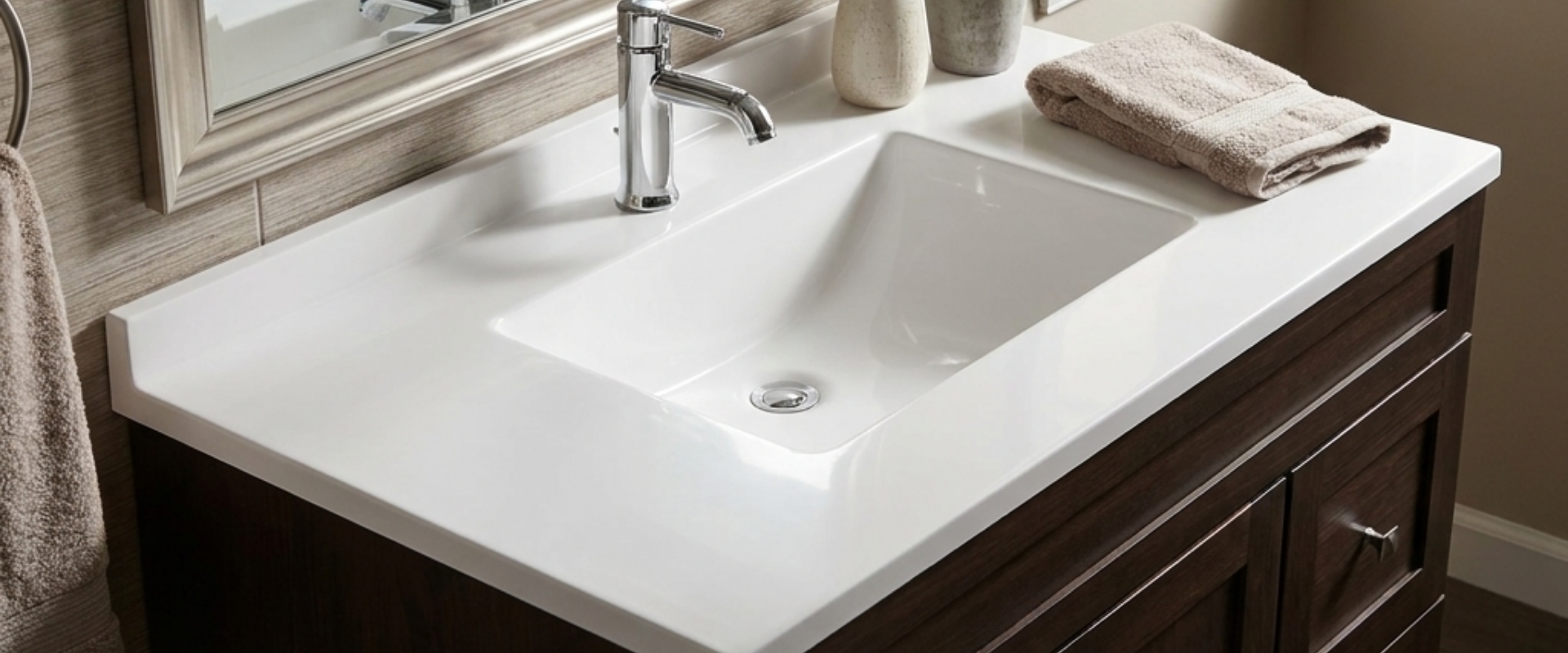
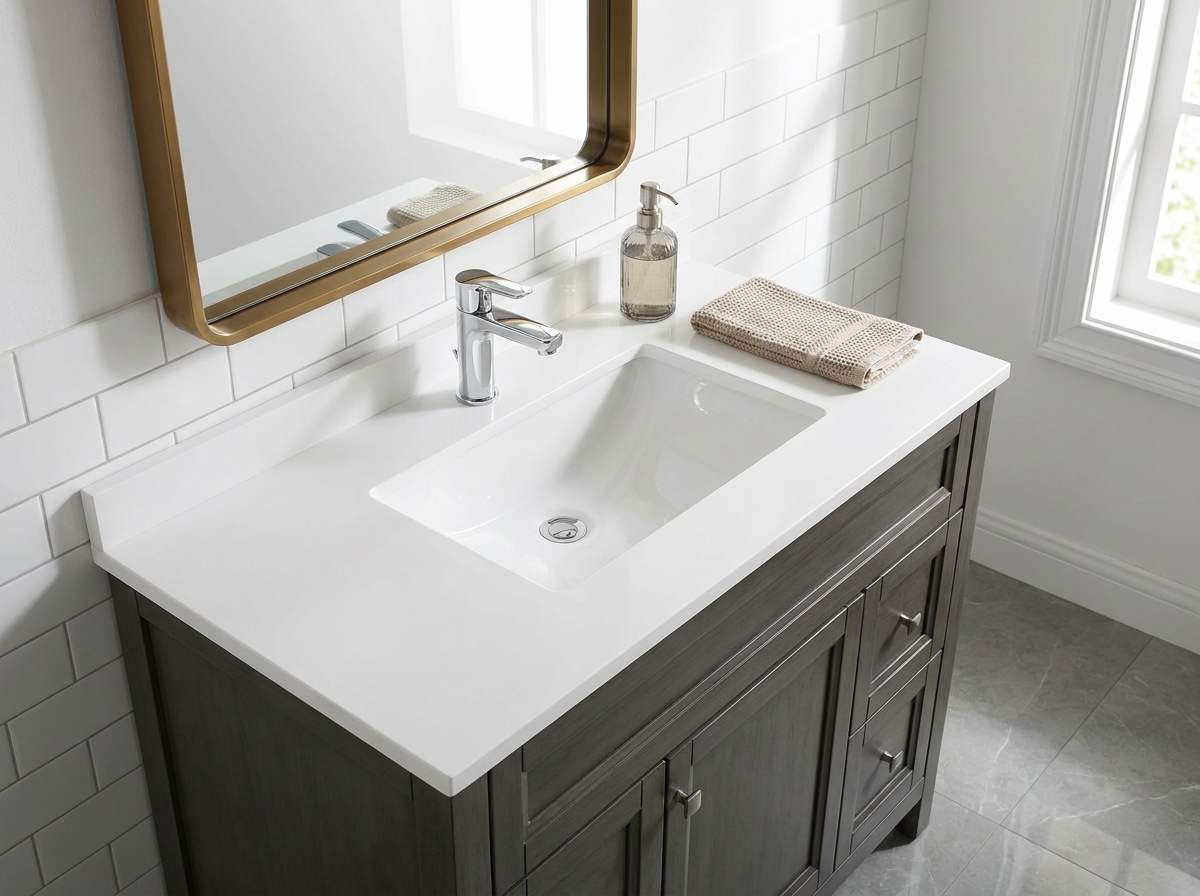
The catalyzed mix is poured into the mold over the cured gel coat and distributed evenly, with special attention to corners, drain areas, and integral bowl cavities. For vanity tops with integral bowls — like our Classic Oval or Minimalistic Capri — the mold is shaped so that the bowl and countertop form a single, seamless piece with no joints or seams.
Step 4: Curing
The resin undergoes an exothermic chemical reaction (cross-linking) that transforms it from a liquid into a rigid solid. Temperature and humidity in the curing area are monitored to ensure consistent results. Under-curing leads to soft spots; over-curing can cause warping or stress cracks. ARSTAR's climate-controlled production facility maintains optimal curing conditions year-round.
Step 5: Demolding
Once the piece has fully cured, it is carefully removed from the mold. The release agent applied in Step 1 allows clean separation. The gel coat — which was applied against the polished mold surface — now faces outward as the smooth, glossy (or matte) finished surface.
Step 6: Quality Control and Inspection
Every ARSTAR piece passes through a multi-point quality inspection before it is approved for shipment:
- Visual inspection: Surface is examined for gel coat defects — pinholes, bubbles, color inconsistencies, or veining flaws.
- Dimensional verification: Length, width, depth, bowl dimensions, and faucet hole placement are measured against engineering specifications.
- Structural integrity: Pieces are checked for proper cure, uniform thickness, and absence of voids or delamination.
- Finish quality: Gloss level is verified for gloss finishes; surface texture is confirmed for matte finishes.
Pieces that do not meet spec are rejected and recycled. Our quality management system requires documented inspection records and continuous improvement tracking. Learn more about our certifications on the certifications page.
Batch Consistency for Large Projects
One of cultured marble's key advantages over natural stone is batch consistency. When a hotel orders 200 vanity tops in Carrara White, every unit needs to look the same. ARSTAR achieves this through standardized gel coat formulas, controlled application techniques, and in-process color matching. Our ISO-certified processes ensure that the first vanity top and the two-hundredth vanity top are virtually indistinguishable.
See Our Products
The manufacturing discipline described above is applied to every product we make — from 17" powder room vanity tops to 36x60 shower pans and full-height shower wall panels. Explore our full catalog:
- Vanity Tops — Classic, Contemporary, and Minimalistic collections
- Shower Panels — Brick, Chevron, Solid, and Calacatta patterns
- Shower Pans — Multiple sizes and drain configurations
Have questions about our process or need a custom solution? Contact ARSTAR — our team is ready to help.