What Exactly Is Cultured Marble?
Cultured marble is an engineered surface material composed of crushed natural marble (calcium carbonate) blended with polyester resin, then finished with a durable gel coat. The result is a non-porous, seamless surface that looks and feels like quarried stone but costs a fraction of the price and offers superior moisture resistance.
Since 2002, ARSTAR has manufactured cultured marble products at our facility in Guadalupe, Nuevo Leon, Mexico, distributing across North America from our Laredo, Texas warehouse. Every piece we produce meets CSA B45.5 and ANSI Z124.3 quality standards — so you can specify our products with confidence on commercial and residential projects alike.
How Cultured Marble Is Composed
Understanding the composition helps explain why cultured marble performs so well in wet environments:
- Calcium carbonate (crushed marble): Makes up roughly 75 % of the core mix, giving the material its density and natural stone appearance.
- Polyester resin: Binds the marble particles together and provides structural integrity, impact resistance, and a degree of flexibility that prevents cracking.
- Gel coat: A high-gloss or matte polyester finish applied to the mold before the core is poured. The gel coat is what creates the veining patterns, solid colors, or granite-look finishes — and it seals the surface so no water can penetrate.
The Manufacturing Process in Brief
Every ARSTAR cultured marble product goes through the same carefully controlled process:
- Mold preparation: Precision molds are cleaned, polished, and treated with release agents.
- Gel coat application: Colored gel coat is sprayed or hand-applied inside the mold. This layer becomes the visible surface of the finished piece and is where artisans create veining, swirls, and color blends.
- Core pour: The resin-and-marble mixture is poured over the gel coat and allowed to cure under controlled temperature and humidity.
- Demolding and quality control: Once cured, the piece is removed, inspected for surface defects, and dimensionally verified.
For a deeper look at this process, read our article on how cultured marble is made.
Key Advantages of Cultured Marble
Non-Porous Surface
Unlike natural granite or marble, cultured marble does not require sealing. The gel coat creates a continuous barrier against water, bacteria, and staining. This makes it ideal for bathrooms, showers, and other wet areas.
Seamless Integration
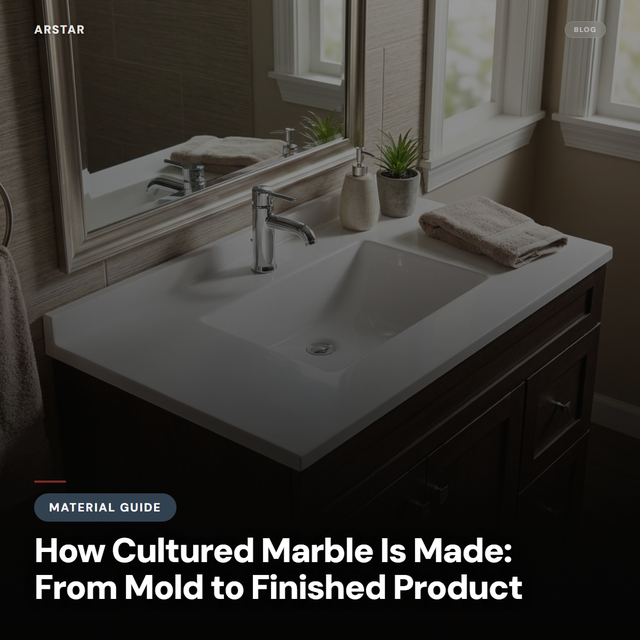
ARSTAR vanity tops are cast with integral bowls — the bowl and countertop are a single piece with no seams where water can collect. Our product lines include Classic (Oval, Camila), Contemporary (Charlotte, Contempo, Carolina), and Minimalistic (Capri, Catherine, Christine, Alexa) collections, each offering different bowl shapes: oval, rectangular, wave, and square. Browse the full lineup on our vanity tops page.
Customization
With 12 colors and finishes — from Carrara and Calacatta veining to solid whites, bones, and grays — cultured marble can match virtually any design palette. Both gloss (standard) and matte (premium) finishes are available across our entire catalog.
Affordability
Cultured marble typically costs 30 – 50 % less than natural stone or engineered quartz when you factor in fabrication, edge profiling, and bowl cutouts. Because integral bowls eliminate the need for a separate undermount sink, labor and material savings compound.
Certified Quality
ARSTAR products carry CSA B45.5 / ANSI Z124.3 certification, confirming compliance with North American plumbing fixture standards for stain resistance, chemical resistance, and structural load. Learn more on our certifications page.
Common Applications
Cultured marble is most commonly found in:
- Vanity tops: Single and double bowl configurations in widths from 17" to 73". View ARSTAR vanity tops.
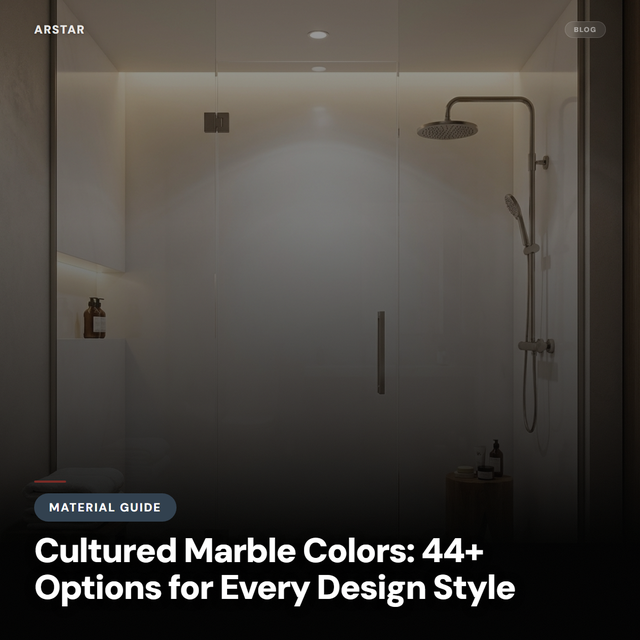
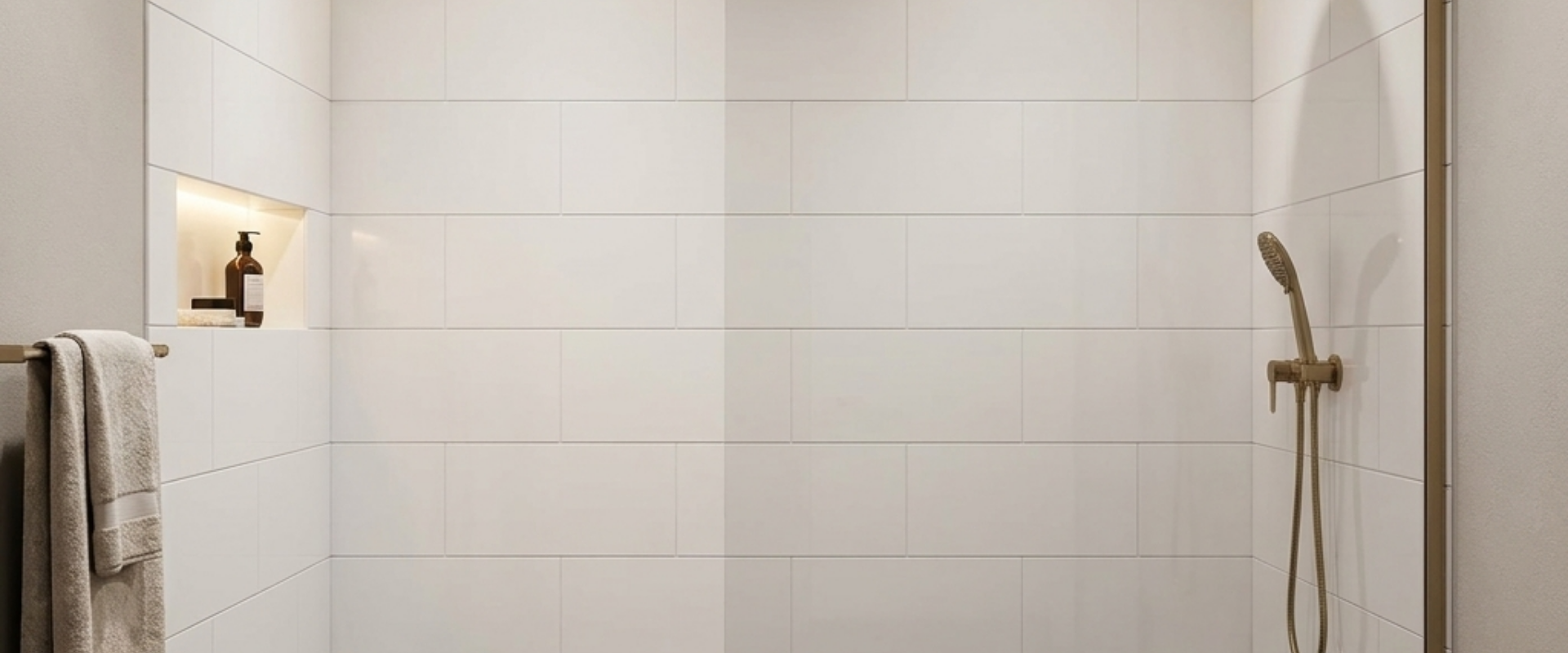
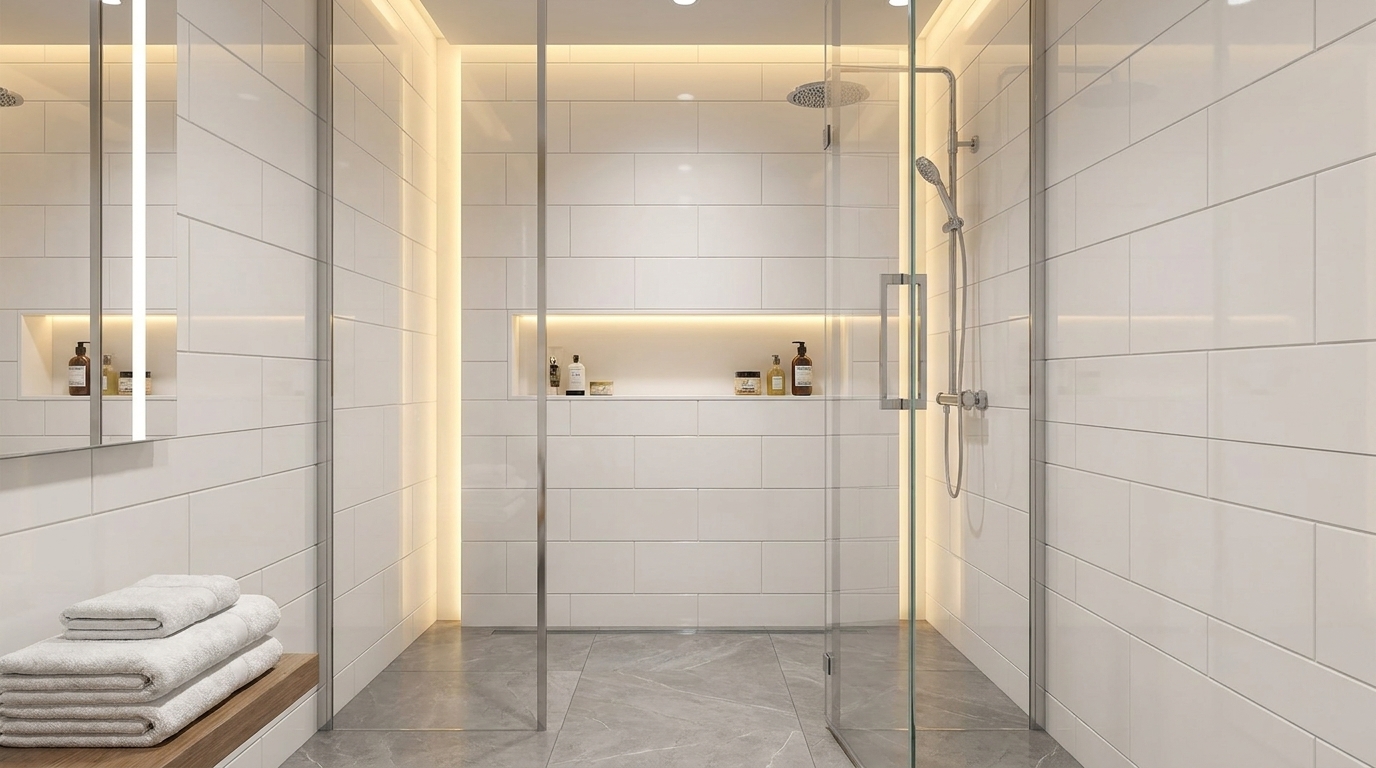
- Shower wall panels: Full-height panels in patterns like Brick 3x6, Brick 6x24, Textured Brick, Chevron, Solid, and Calacatta Gray Solid that eliminate grout lines entirely. Explore shower panels.
- Shower pans (bases): Available in sizes from 36x36 to 36x60 with center, right, left, or trench drain options. See shower pans.
- Lazy Susans and specialty items: ARSTAR also produces cultured marble lazy Susans for kitchen and dining use.
How Cultured Marble Differs from Natural Stone
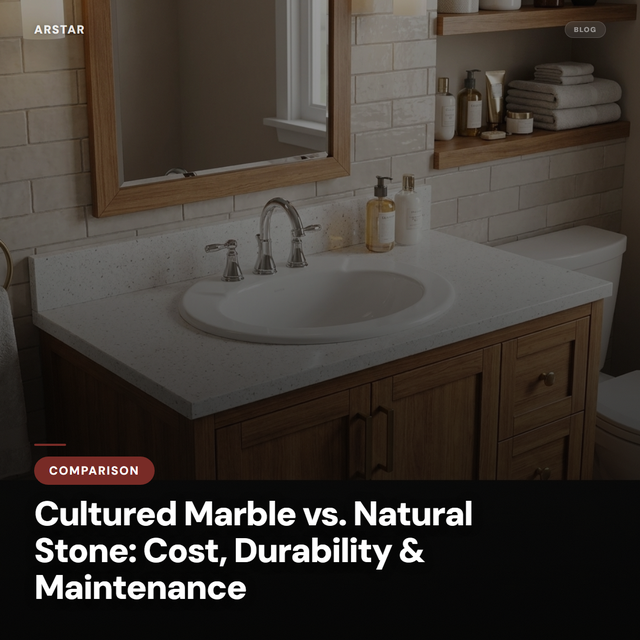
The most important differences come down to porosity and maintenance. Natural marble and granite are porous — they must be sealed annually, and even then spills can stain if not wiped promptly. Cultured marble's gel coat eliminates that concern entirely. Natural stone also varies in color and pattern from slab to slab, which complicates large projects where color consistency matters. Cultured marble can be produced in controlled batches to ensure uniformity across hundreds of units.
For a detailed comparison, see our guide on cultured marble vs. natural stone.
Is Cultured Marble Right for Your Project?
If you need a cost-effective, low-maintenance, and highly customizable surface for bathrooms, hotel renovations, multifamily housing, or custom homes, cultured marble checks every box. ARSTAR's 20+ years of manufacturing experience, ISO-certified quality systems, and 12 color options make us the partner of choice for builders, designers, and distributors across North America.
Visit our cultured marble overview page to learn more, or contact ARSTAR to request samples, pricing, or a project consultation.