The Natural Stone Appeal — and Its Hidden Costs
Natural stone — granite, marble, travertine — has been the gold standard for luxury surfaces for centuries. There is no denying the beauty of a slab of Calacatta marble pulled from an Italian quarry. But that beauty comes with practical trade-offs that many buyers do not fully appreciate until after installation. Cultured marble was engineered specifically to deliver the look of natural stone while solving its biggest problems.
Porosity and Sealing
Natural stone is porous. Granite is less porous than marble, but both require periodic sealing to prevent staining. Marble is especially vulnerable — acidic substances like lemon juice, vinegar, and even some bathroom cleaners can etch the surface, leaving dull spots that require professional refinishing.
Cultured marble is completely non-porous. The gel coat surface is a sealed barrier that repels water, soap, hair products, and bathroom chemicals. No sealing is ever required — not at installation, not after one year, not after ten years. For property managers and hotel operators, this eliminates a recurring maintenance expense that natural stone demands.
Weight and Structural Requirements
Natural stone is heavy. A 49" granite vanity top can weigh 80–120 lbs, requiring reinforced cabinetry and careful handling during installation. For upper-floor apartments or retrofit projects, the weight of natural stone can be a structural concern.
A comparable ARSTAR cultured marble vanity top weighs 35–50 lbs — roughly half the weight of granite. This means standard cabinetry supports it without reinforcement, shipping costs are lower, and installation is safer and faster.
Price Comparison
Natural stone pricing varies widely depending on the species, origin, and quality of the slab. Budget granite starts around $40–60/sq ft installed; premium marble can exceed $150/sq ft installed, not including sink cutouts, edge profiling, and backsplash fabrication.
Cultured marble vanity tops with integral bowls, pre-drilled faucet holes, and included backsplash typically cost $15–35/sq ft — and they arrive ready to install with no additional fabrication. The savings are even more dramatic at scale. A 100-unit apartment project switching from granite to cultured marble can save tens of thousands of dollars in material and labor costs.
Color Uniformity vs. Natural Variation
Every natural stone slab is unique. While this is part of its appeal in custom homes, it creates challenges on large projects where consistency matters. Ordering 50 granite vanity tops in "White Fantasy" means each slab will have different veining, background tone, and mineral inclusions. Matching across units is difficult and often requires costly slab selection visits.
ARSTAR's cultured marble colors are produced with controlled consistency. Our 12 color options — including Carrara and Calacatta veining that closely mimics natural stone — are formulated to look consistent from batch to batch. Each piece has subtle, natural-looking variation (the hand-applied gel coat ensures no two are identical), but the overall look is uniform enough for multi-unit specifications.
Seamless Integration
Natural stone vanity tops require a separate sink (undermount or vessel), a separate backsplash piece, and edge profiling — all fabricated, fitted, and sealed on-site or in a stone shop. Every seam is a potential failure point for water intrusion.
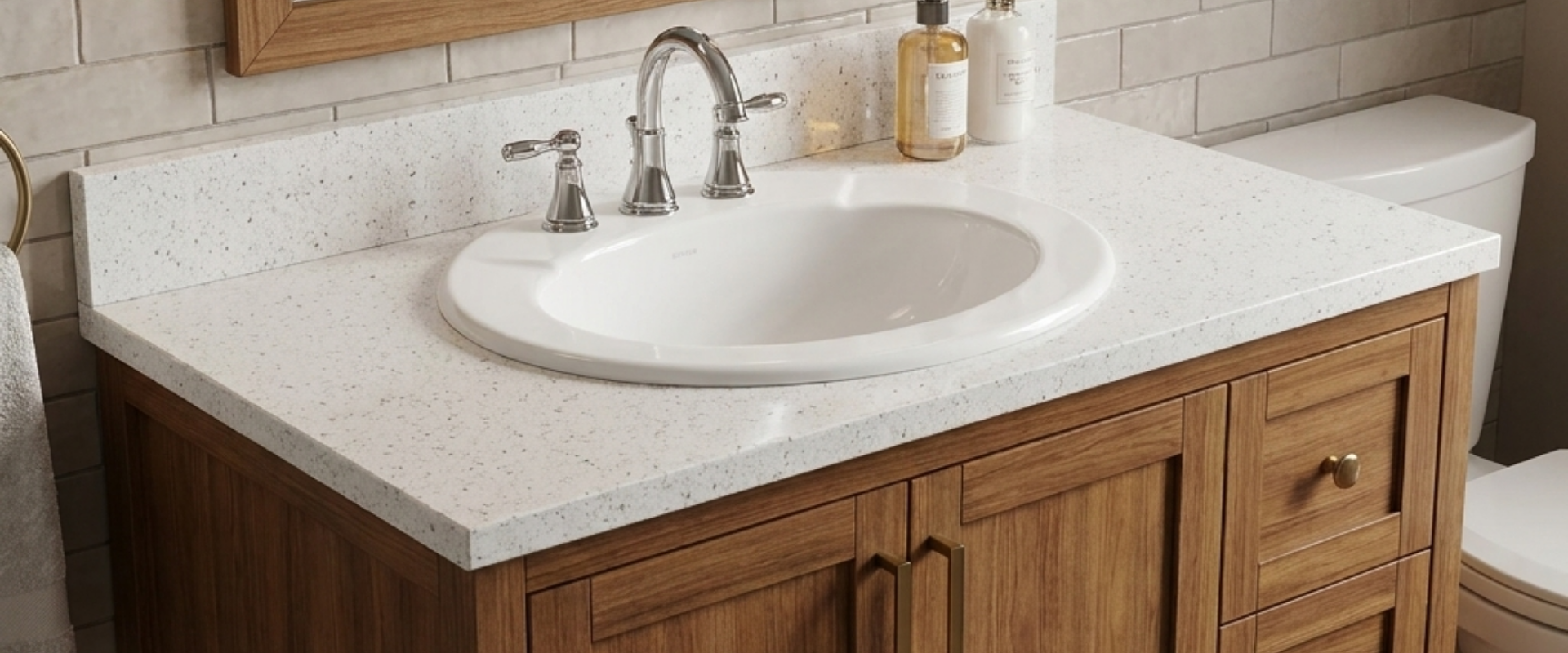
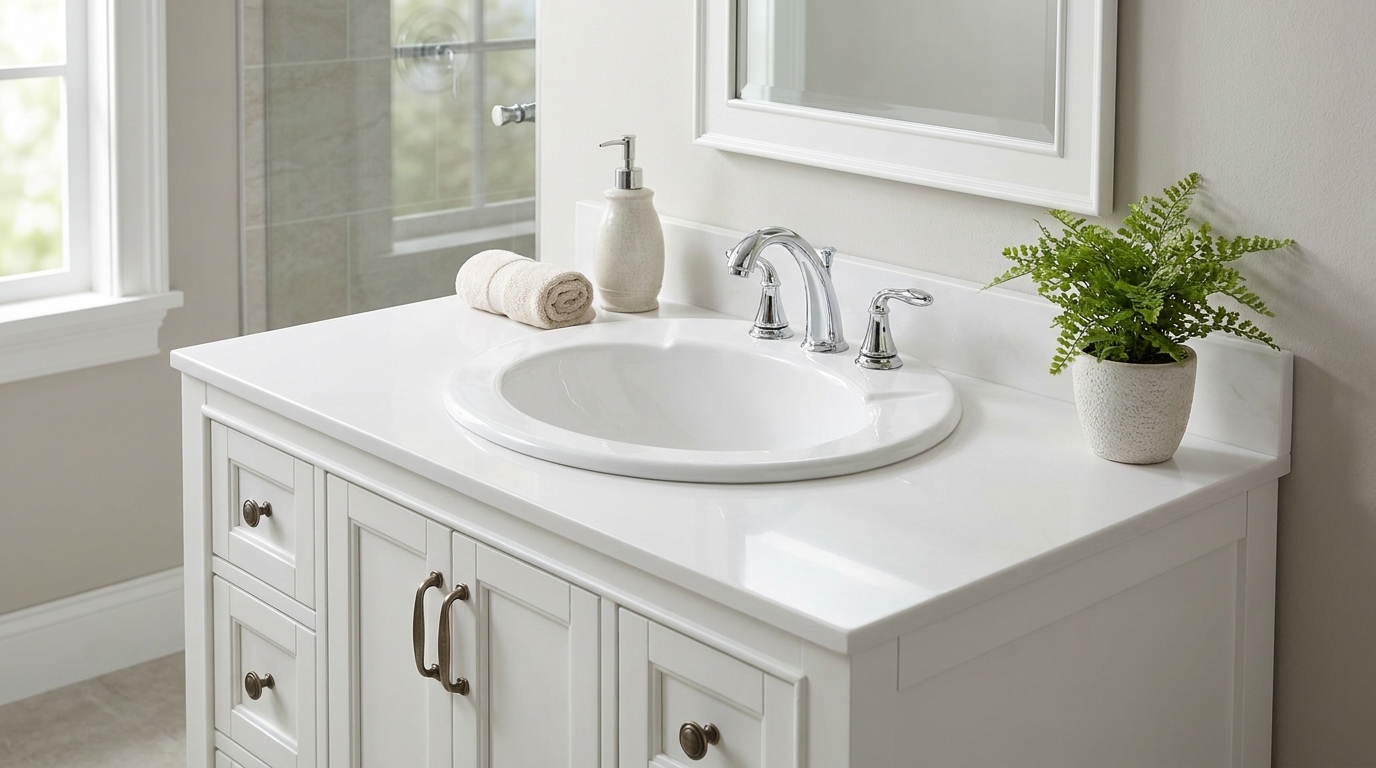
ARSTAR cultured marble vanity tops feature integral bowls and included backsplashes — all cast as a single, seamless piece. No seams at the bowl, no caulk joints to maintain, no separate sink to purchase. Our collections include oval, rectangular, wave, and square bowl shapes across Classic, Contemporary, and Minimalistic lines. Browse all models.
Repairability
Chips and cracks in natural stone require professional repair — often involving color-matched epoxy fills and re-polishing. The results are usually visible.
Minor scratches and dull spots on cultured marble's gel coat can often be restored with automotive polishing compound and a soft cloth — a simple repair that anyone can do. Deeper damage may require a gel coat repair kit, but the cost and effort are far less than natural stone restoration.
Environmental Considerations
Quarrying natural stone is energy-intensive and environmentally disruptive. Cultured marble uses calcium carbonate (abundant and widely available) combined with polyester resin, and manufacturing waste can be recycled into the production process. While neither material is perfectly "green," cultured marble's lower weight also means lower transportation emissions per unit.
Making the Right Choice
Natural stone is the right choice when the project demands the unique, irreplaceable character of a specific quarried slab — a statement piece in a luxury master bath, for example. For everything else — hotel bathrooms, multifamily housing, medical facilities, standard residential bathrooms — cultured marble delivers the aesthetic of natural stone with none of the maintenance burden, at a fraction of the cost.
Explore ARSTAR's stone-look colors and full product lineup at vanity tops, shower panels, and shower pans. Or contact our team for samples, pricing, and project support.